
Attack Submarines that are Attack Submarines
Fleet Logic Issue 43 - May 8, 2026

“And fast attacks that hunt and find / With crews that are by far the navy’s best” - Submarine Song, Randy Mattsen, 2022
Last Friday, I proposed a way to broaden the industrial base so the U.S. Navy can build more submarines by changing the structure and thickening capacity instead of just writing bigger checks. The concept revolves around building both conventional and nuclear-powered submarines using shared design components. This week I’ll be taking a look at what the attack submarine part of this new family of boats should be to allow the fleet to grow in numbers and capability.
As currently planned, the Navy intends to replace the Virginia-class boats in production with a new design, currently going by the designation SSN(X). While this class of boats is still very much in the early concept stages, what has been discussed is a warning sign. Reports describe a boat that takes the speed and “horizontal payload” (torpedo room and weapons storage) of the Seawolf-class design, and mixes in the acoustic quieting, sensors, and VLS capability of the Virginia-class design. In addition, the intent is to combine that with the operational availability and service-life logic associated with Columbia-class nuclear-powered ballistic missile submarines. It sounds like a natural evolution. It also sounds like a recipe for an attack boat that is larger, more complex, and more expensive than the force can afford at scale. (See USNI News: Report to Congress on Navy Next-Generation Attack Submarine) USNI News
In constant FY2023 dollars, the Navy estimate for SSN(X) average unit procurement cost is $6.7–$7.0 billion, while the Congressional Budget Office (CBO) estimates the price at $7.7–$8.0 billion. In that same discussion, CBO’s assumed submerged displacement is about 10,100 tons—about 11% larger than the Seawolf-class. You can see where this is going. Bigger means more expensive, and more expensive winds up meaning fewer boats. Given that the submarine force is one where availability is already being constrained by maintenance and industrial capacity, “fewer boats” is not just an inconvenient bookkeeping detail—it’s the operational outcome. (See USNI News: Report to Congress on Navy Next-Generation Attack Submarine) USNI News
This is why discussion of what comes after the Virginia-class is a debate about discipline, not technology. If the SSN(X) follows the path it is on, the silent service will get fewer hulls and less margin—while telling itself it’s okay because each individual boat is “more capable.”
So the question is: What does an attack submarine need to be?
What is an Attack Submarine?
Attack submarines—SS (conventionally-powered) and SSN (nuclear powered)—exist first and foremost to hunt and kill submarines and surface ships. They screen forces, scout, deny sea space, and survive in contested water so they can fight again.
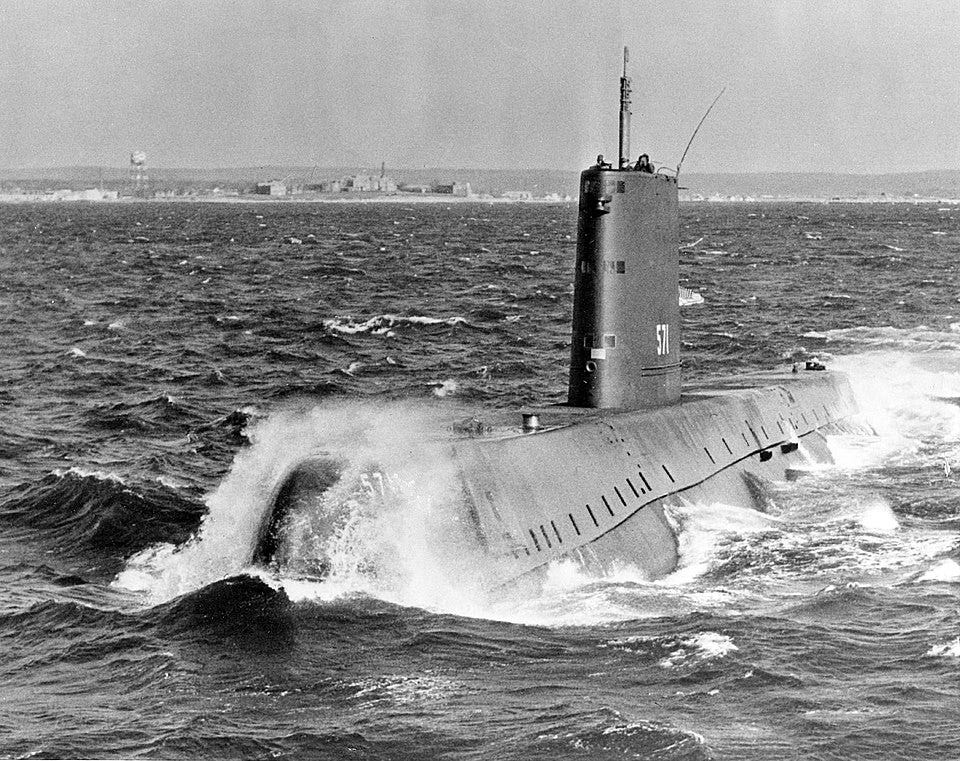
The nuclear powered boats of today developed from their conventionally powered attack submarine predecessors. The first SSN was the USS Nautilus, SSN 571, commissioned in 1954, and while she was a marvel of propulsion engineering, she still strongly resembled her conventionally powered cousins, though she was larger. As the SSN developed, the Navy continued to build conventionally powered attack boats as well. The last class of these boats was the Barbel-class, the first of which came into commission in 1959. (See NHHC: DANFS Nautilus IV (SSN-571) and NHHC: DANFS Barbel II (SSN-580)) NHHC SSN 571 and NHHC SS 580
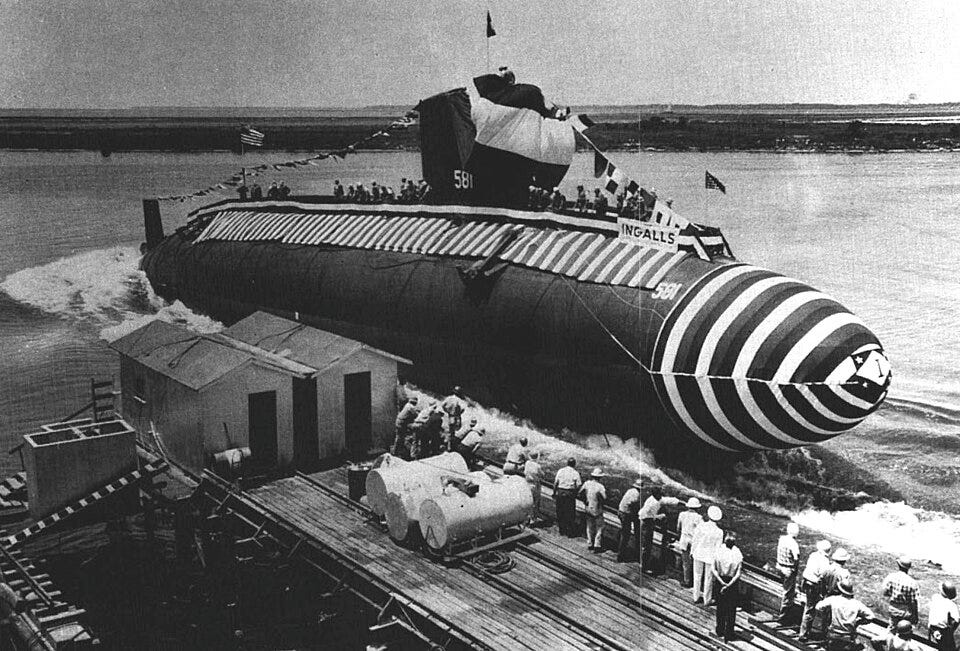
For the first several classes, the size of the nuclear attack boats remained consistent. Going nuclear did not immediately cause massive increases in size. For example, USS Nautilus came in at 4,092 tons submerged, The Skipjack-class came in at 3,500 tons submerged, and the Sturgeon-class only increased to 4,780 tons submerged. The first real increase in size came with the Los Angeles-class at 6,927 tons submerged. (See Department of Energy: THE U.S. NAVAL NUCLEAR PROPULSION PROGRAM 2025) DoE
The Los Angeles-class growth was mission-driven. In the Cold War, the need to support carrier groups meant that sustained speed, endurance, and repositioning mattered for screening and sea control. Los Angeles and her sisters needed to be able to fight inside that fleet problem set.
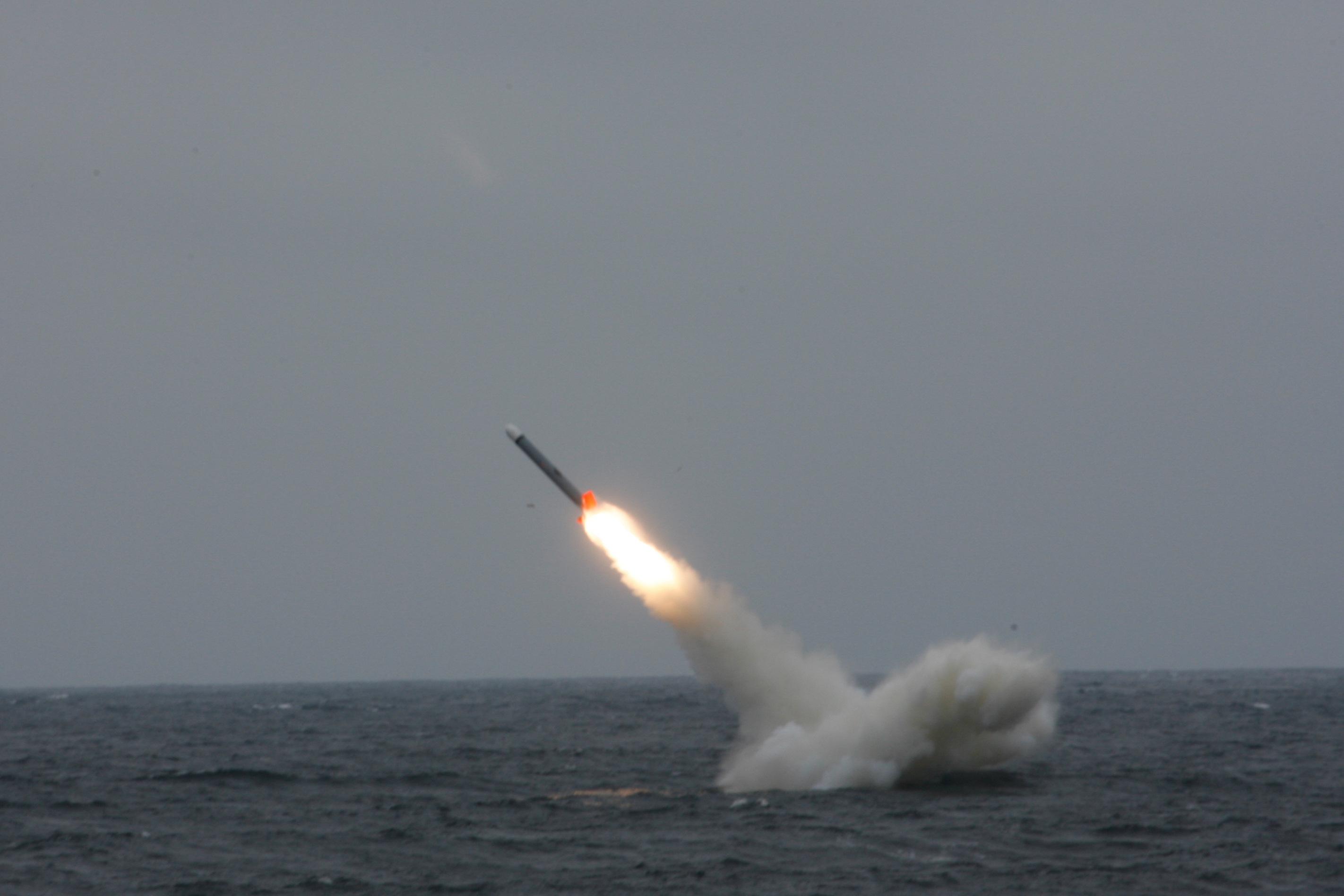
Later Los Angeles-class boats were given a new capability. These vessels were equipped with 12 Vertical Launch System (VLS) tubes for Tomahawk. That was not a tactical tweak; it was a structural decision that hard-wired strike capacity into the SSN. (See US NAVY: Fact Files Attack Submarines SSN) Fact Files
The following Seawolf-class did not have a vertical launch system. Instead, these boats carry eight torpedo tubes and can hold up to 50 weapons internally. In other words, they show that you can build a high-end, expensive, undersea dominance SSN without treating strike volume as a defining feature of the attack boat. Sadly, few of these boats were built due to the budget cuts following the end of the Cold War. (See US NAVY: Fact Files Attack Submarines SSN) Fact Files
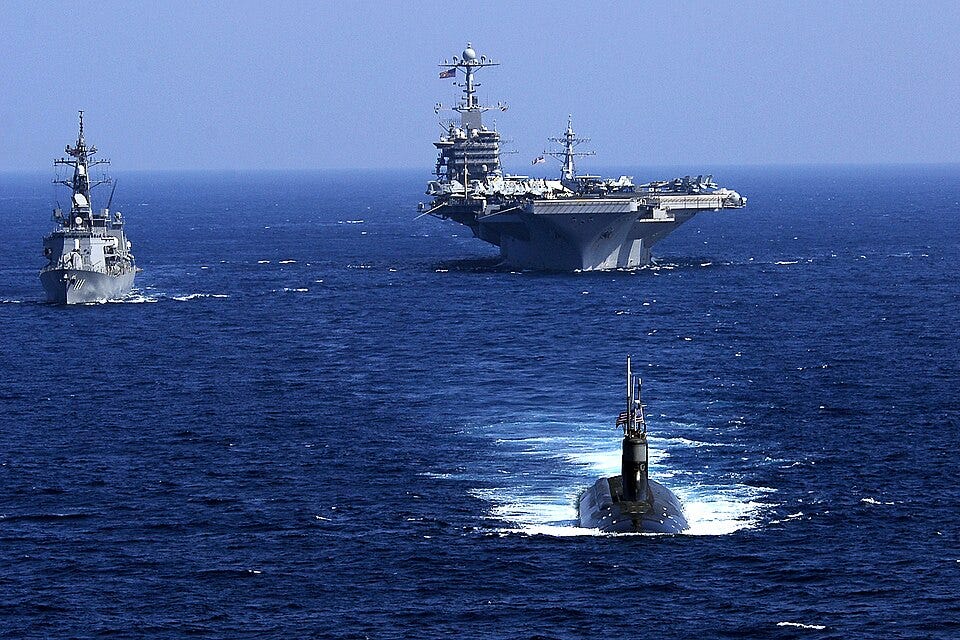
The Virginia-class brought back VLS with 12 vertically launched tomahawks each, and Block V of this class will take it to the next level. Block V adds the Virginia Payload Module (VPM) to the vessels, an additional hull section that brings along four additional large-diameter payload tubes. Each tube holds seven Tomahawks each, adding 28 additional missiles for a total of 40. This also causes a sharp jump in displacement: previous Virginia-class boats run about 7,800 tons submerged, and the Block V boats are expected to be around 10,200 tons submerged. (See US NAVY: Fact Files Attack Submarines SSN) Fact Files
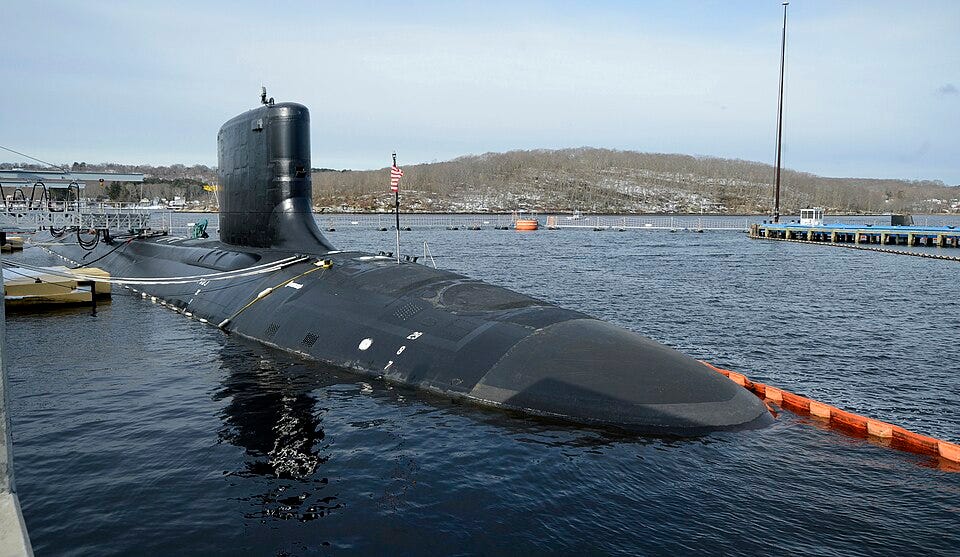
That’s a big change, and that growth is driven by the need to carry land-attack payload.
Over the next few years, the fleet will lose the Ohio-class SSGNs. That’s four boats, 154 vertically launched Tomahawks each, carried on a stealthy platform. It’s an extremely useful capability no one wants to lose. Suffice to say that drop in submarine-launched cruise missiles will be noticed. At the moment, the chosen solution is to add that strike capability to the already in-production SSN class. (See US NAVY: Fact Files Guided Missile Submarines SSGN) Fact File
That is the drift. Attack submarines started as torpedo-centered hunters. Over time, strike payload became a design driver—not because the attack mission demanded it, but because “we need more VLS” is a powerful fleet-wide demand signal. If SSN(X) inherits that same impulse, then the drift becomes permanent: the attack submarine stops being sized around the attack mission and starts being sized around the fleet’s desire for more launch cells. That locks in larger hulls, higher cost, fewer boats, and less availability, all while calling the result an “attack submarine.”
What an Attack Submarine Actually Needs
What an attack submarine needs to do is win undersea combat. It must be capable of hunting and killing enemy submarines and surface ships. It should be useful for scouting, screening forces, and surviving in contested environments. To accomplish these tasks it needs stealth, sensors, and the weapons to kill those targets.
Attack submarines do not need to be burdened with other missions.
If a mission requires major payload volume, be it large-volume land-attack strike capacity, Unmanned Undersea Vehicle (UUV) carriage, extensive Special Operations Forces (SOF) space, or “future payload bays”—then that mission should be assigned to a nuclear-powered guided missile submarine (SSGN) variant. SS and SSN variants need to stay focused. Having a separate SSGN variant is not extra complexity for its own sake. It is the pressure-release valve that keeps the SS and SSN from becoming oversized compromise boats.
That separation is not academic. This separation is how to maintain buildability and affordability into the next generation of attack boats. Having a separate SSGN class to handle those missions is how the Navy can maintain the discipline to keep the attack boats from growing beyond their scope.
We Need to Build More Attack Submarines
It is not a state secret that the Navy does not have enough attack submarines. In order to get numbers faster, the Navy should abandon the idea that every attack submarine has to be nuclear. The Navy should build attack submarines in both SS and SSN forms, inside a single family concept where propulsion changes endurance and reach, not mission identity.
While this is a radical concept in the Navy of today, it is also one that is grounded in the fleet’s history. The U.S. Navy operated SS and SSN boats together for decades as the diesel force was slowly phased out. The last full-fledged diesel attack boat, USS Blueback (SS-581), left service in 1990, and the diesel era didn’t fully close out until the research submarine USS Dolphin (AGSS-555) decommissioned in 2007. In other words, the “all-nuclear” reality is relatively recent. (See USNI Naval History Magazine: The Last Diesel Boat and NHHC: DANFS Blueback II (SS-581)) USNI Naval History Magazine and NHHC
As noted, these submarines should be built using a family approach that stresses commonality. The SS and SSN should share as much of the attack-submarine design as practical: combat system, sensors, torpedo-room logic, control spaces, crew interfaces, training assumptions, maintenance practices, and weapons integration. The propulsion section changes the boat’s reach, endurance, and support model. It should not change the basic identity of the platform.
This is not an entirely novel concept. France already moved in this direction with the Barracuda family: the Suffren-class is a nuclear-powered attack submarine, while the Shortfin Barracuda design was developed as a conventionally powered derivative. Before the AUKUS agreement, Australia intended to acquire the conventionally powered variant as their Attack-class. While that class has been cancelled, the point remains that submarines that can be either nuclear- or conventionally powered have been designed. This does not mean that the United States should copy the French design. The point is that the basic design logic already exists: a common attack-submarine family can support different propulsion models while preserving a shared platform identity. (See Naval Group: Submarines and Naval News: Australia and Naval Group Reach Settlement) Naval Group Naval News
Japan’s Taigei class, at roughly 3,000 tons, demonstrates that a conventionally powered boat can be a serious undersea hunter in the roles that matter most for numbers: chokepoints, regional sea denial, scouting, and anti-ship/anti-submarine work inside a theater where persistence and positioning matter more than global transit range. The goal is not a “cheap submarine that does everything.” The goal is more attack submarines that are actually attack submarines. (See MHI: Submarine: Taigei-Class) MHI
I recommend that a similarly sized boat be acquired. This size range is large enough to carry a bow-mounted sonar and a lateral sonar array. A towed sonar array could also be fitted. The submarine could carry six 21-inch torpedo tubes, which would allow it to use existing US Navy weapons compatible with that size tube. A speed of 20 kts should be achievable.
A smaller, disciplined SSN—closer to the 4,000–5,000 ton class rather than a 10,000 ton strike-volume platform—is also plausible if requirements discipline is real. The Navy’s own history already proved “small can be fast.” The Skipjack-class were capable of 33 kts and were only 3,500 tons submerged. As these boats should be nearly identical to their conventional sisters forward of the propulsion section, they would carry the same sonar systems and torpedo tubes and be armed with the same range of weapons.(See USNI Proceedings: The U.S. Navy: How Fast Is Fast?) USNI Proceedings
Even if the Navy does not proceed with the conventionally-powered aspect of this proposal, the SSN aspect should be pursued. The way to get to more boats remains to build boats that are less expensive. Smaller, more focused SSNs will be less expensive than a larger, more expensive boat. Remember, the Seawolf became too expensive to build. It’s price per copy was $3 billion then, and in today’s dollars would work out to around $6.5 billion in 2026 dollars. The Navy’s estimate I mentioned earlier was $6.7 to $7 billion. SSN(X) is already tracking as too expensive to build. (See The War Zone: Navy Wants New ‘Seawolf-Like’ Attack Submarines To Challenge Russian And Chinese Threats) TWZ
It is worth noting that conventional submarines do open posture options. Nuclear-powered submarines carry a real infrastructure and support burden. Conventional boats are easier to base forward and easier to sustain in more places than their nuclear-powered sisters.
This does not just mean in foreign countries. If the sensible step of acquiring more than just two submarine tenders is taken, pairing them with conventional boats enables concepts where tenders and temporary anchorages can support small detachments without committing to fixed, predictable bases. Essentially anywhere there is a sheltered anchorage deep enough for the vessels to operate could potentially be used, and the tender could change locations regularly. Mobility and dispersion complicate targeting and impose opportunity costs on an opponent’s Intelligence, Surveillance, and Reconnaissance (ISR) and magazine, especially when they have plenty of other high-value targets they also want to strike.
Attack submarines that are attack submarines is not a case of nostalgia for the 1970s. It is discipline. The Navy does not need the next attack submarine to become a larger, more expensive, more complicated strike platform wearing an SSN label.
The better answer is to divide the family by mission instead of letting every mission pull the attack boat out of shape. Conventionally powered boats should provide numbers, theater presence, and regional undersea combat power. A true nuclear-powered attack submarine should provide the same attack identity with greater reach, endurance, and speed. The SSGN variant should carry the missions that require major payload volume, from large strike loads to other payload-heavy demands. Held together by common design discipline where commonality makes sense, that family gives the Navy more submarines without allowing every requirement to become an excuse for a larger SSN.
That is how the Navy gets more attack submarines and not fewer exquisite hulls.
Next Friday we’ll look more at the SSGN and SSBN components of the force.
Thanks for reading.
-Alan Ramsey
Fleet Logic remains free to read. If you value the work, a pledge helps support future analysis.
Fleet Logic is an independent publication offering commentary, opinion, and analysis on naval strategy, defense acquisition, and related topics. While we strive for accuracy and thoroughness, the views expressed are those of the author and do not represent official positions of the U.S. Navy, Department of Defense, or any affiliated organization. This newsletter is for informational purposes only and should not be construed as professional, military, or legal advice.
Fleet Logic is written from an independent civilian perspective and is not affiliated with any official military command, veterans’ organization, or defense contractor.
All analysis is based on open-source materials and publicly available data; no classified or privileged information is used.
References to U.S. military programs are intended for broad educational and analytical purposes only and are based entirely on publicly accessible information.
A lot of the size of these ships is driven not by VLS but by the need to make speed while simultaneously being very quiet. Nautilus was similar in size to diesels of its era, but it was about as noisy as rocks in a dryer. Your Skipjack class sub would be very noisy and dead meat in a fight with a peer submarine. The typical (read that as not Ohio SSGN replacement) attack sub has been carrying tomahawks since I was a young fellow. The difference is that those tomahawks were carried in lieu of torpedoes. Your idea removes a valuable tool from an SSN skipper's tool box. To be frank, I'd rather have VLS and the potential to load AShCMs than piles of conventional torpedoes. Against a modern ASW ship with helos and potentially ASW drones, I want stand-off, and a missile can give me that, where piles of torpedoes won't.
The reality is that your 'no VLS' attack boat just gives up torpedoes and still has cruise missiles stored in the magazines. The LAs and Virginias with just 12 TASMs/TLAMs were fine. The only reason for the VPM is to replace the Ohio SSGNs, since we can't afford a bespoke sub to do that. You're conflating this requirement with 'the SSNs have too much VLS'.
You continue to posit positioning diesel boats 'forward' in spite of the continuing issue of shaky alliances and the Chinese A2AD problem. You also ignore the brutal reality that a diesel boat that can't be used to support fleet operations becomes a liability if we need more fleet subs. Your 20 knot diesel boat can't keep up with a task force, so only is useful as an ambush sub at choke points, where a nuke boat can do both jobs.
The brutal reality is that a first class submarine isn't cheap, and the Japanese would rather have nuke submarines than diesels from a purely military standpoint, but popular sentiment in their country is in the way. You only have to look at where the Koreans and Indians are going to realize that anybody who can get nukes wants pretty much only nukes.
The USN's problem is that Congress scaled shipbuilding to a world where we only needed to make 1.5ish subs a year. Then Congress allowed our competitor (China) to basically consume our industries and economy so that they could afford to blitz us with massive numbers of ships. As someone in another forum pointed out, the US built 62 Los Angeles class submarines over the course of a few years. But we had the yards to do that. Adding diesel submarines doesn't help that, it actually makes that problem worse by competing for skilled labor and materials.
If I stand up a factory to build fenders for my new line of pickup trucks, and said factory starts building hybrid-electric pickups, I don't get my fenders, I just get competition.